
Pilates for Seniors: Building Strength and Confidence After 60
Maybe a doctor suggested “core strengthening.” Maybe getting up from a low chair has started to feel uncertain. Maybe the idea of exercise sounds appealing in theory, but the reality of walking into a gym or fitness class feels like too much, too fast.
If any of that sounds familiar, Pilates might be exactly the bridge between knowing you should move more and actually enjoying it.
Pilates for seniors is one of the most researched and well-supported approaches to exercise available for older adults. It builds the kind of strength, balance, and body confidence that translates directly into everyday life, from carrying groceries to walking on uneven ground to playing with grandchildren. And because it is low-impact, controlled, and endlessly modifiable, it meets the body where it is rather than demanding it be somewhere else.
Why Pilates Works So Well for Aging Bodies
The core appeal of Pilates for adults over 60 comes down to a few key features that set it apart from other fitness options.
It trains multiple systems at once. A single session addresses strength, flexibility, posture, and balance simultaneously. Instead of isolating one muscle group the way a weight machine might, Pilates exercises ask the whole body to work together. That integrated approach mirrors the way bodies actually move through daily activities: reaching, bending, lifting, turning.
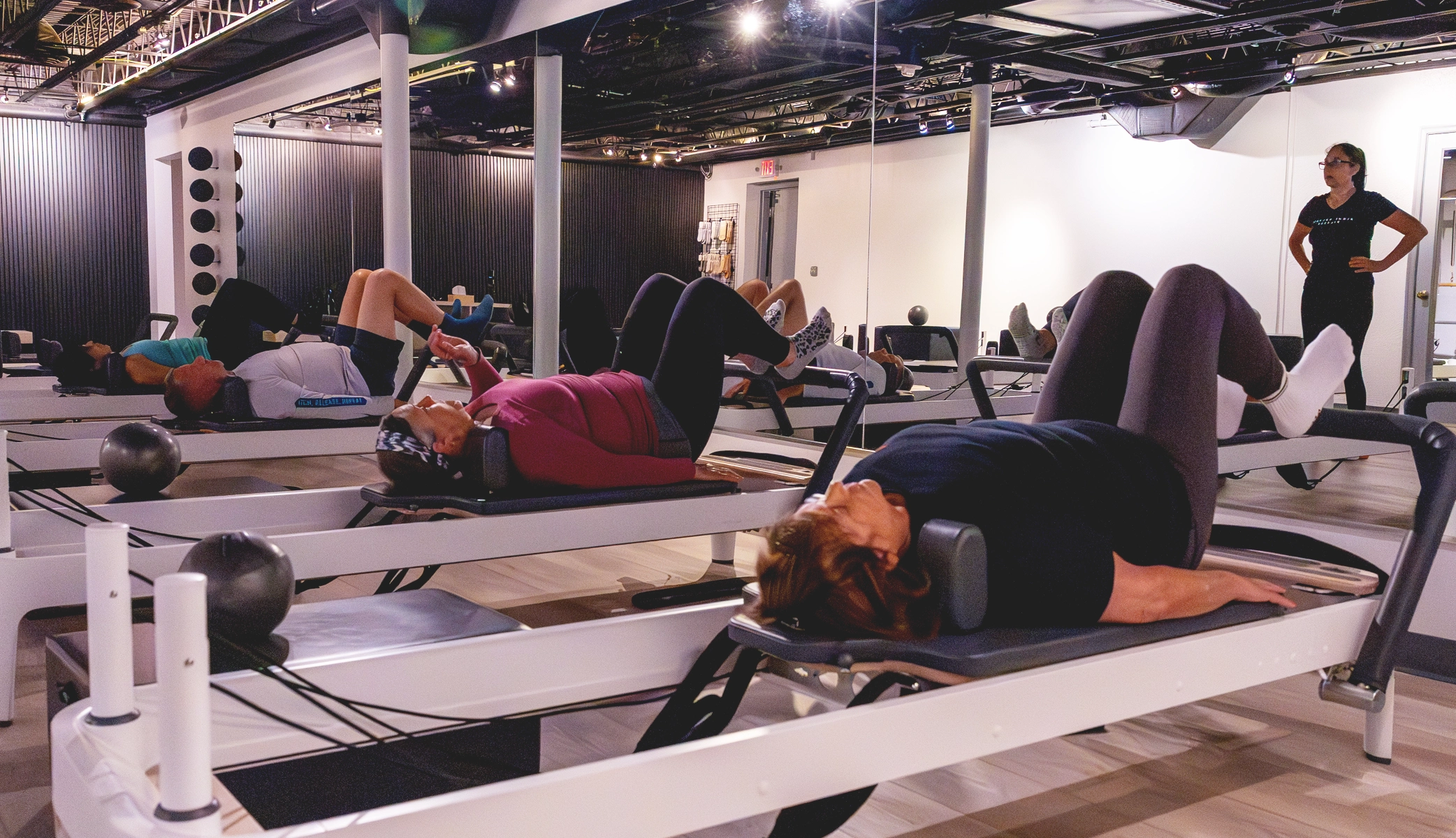
It is low-impact but not low-effort. The Reformer, one of the primary pieces of Pilates equipment, uses a spring-loaded carriage to provide resistance while supporting the joints. Exercises can be performed lying down, seated, or standing, which means they are gentler on hips, knees, and the spine than high-impact activities like running or jumping. But the resistance is real, and the work is challenging. This is not passive stretching.
It is built for modification. Every Pilates exercise can be adapted up or down. Props, spring tensions, body positions, and range of motion can all be adjusted to match someone who is deconditioned and cautious or someone who is already active and looking for more challenge. This is one of the reasons Pilates has become a go-to recommendation from physical therapists for patients transitioning out of rehab and into long-term movement.
Building Strength That Matters
One of the biggest misconceptions about aging is that strength loss is inevitable and irreversible. It is not. Research consistently shows that older adults can build meaningful strength through Pilates.
A randomized clinical trial comparing strength training and Pilates in adults over 60 found that both groups improved their walking capacity and dynamic balance. Pilates matched traditional resistance training for functional capacity, the kind of strength that determines whether someone can walk confidently, climb stairs, or get out of a chair without using their arms.
Additional studies have found that regular Pilates practice improves leg strength, postural control, and self-reported quality of life in older adults. A scoping review focused on older women concluded that Pilates improves strength, flexibility, and the ability to perform everyday tasks, positioning it as a strong tool for aging well.
That last point matters. This is not about building muscle for appearance. It is about maintaining the functional strength to live independently, with confidence.
Balance, Fall Prevention, and Walking Confidence
Falls are a serious health risk for adults over 60, and the fear of falling can be just as limiting as a fall itself. It shrinks someone’s world. They stop walking as far, avoid stairs, give up activities they love.
Pilates directly targets the balance, stability, and mobility factors that drive falls risk. Multiple systematic reviews and meta-analyses of randomized controlled trials have found that Pilates improves functional mobility, gait, postural stability, and reduces fear of falling in older adults.
One randomized controlled trial found significant improvements in balance tests, including Timed Up and Go and the Four-Square Step Test, after a period of Pilates training, with gains that lasted beyond the immediate training phase. Another study of women over 60 found that Pilates practiced twice per week for three months improved limits of stability and single-leg balance, and reduced objective fall risk compared to a non-exercising control group.
These are measurable, clinically meaningful changes that happen within a realistic timeframe. Most studies showing balance and strength improvements used programs of two to three sessions per week, 45 to 60 minutes each, over 8 to 12 weeks.
Bone Density and Osteoporosis: What to Know
Bone health is a critical consideration for anyone over 60, especially women. Osteoporosis and osteopenia increase fracture risk, and certain movements can be problematic when bones are fragile.
Pilates can be a strong tool for bone health when practiced with appropriate modifications. Exercises that strengthen the hips, legs, and spinal extensors, along with standing balance challenges and work in a neutral spine position, are all considered beneficial. The resistance provided by Reformer springs can load muscles and bones safely without the jarring impact of high-intensity exercise.
The important caveat: some traditional Pilates exercises need to be modified or avoided for people with osteoporosis or previous vertebral fractures. The Royal Osteoporosis Society recommends avoiding or modifying movements involving strong forward spinal flexion, loaded twisting, rolling on a curved spine, and sudden or jerky movements, as these can place uneven pressure on the front of the vertebrae and increase fracture risk.
This is where instructor expertise becomes essential. Not every Pilates class is set up to accommodate osteoporosis safely. The instructor needs to know which exercises to substitute, how to cue neutral spine alignment, and how to progress someone gradually. At Right Balance Pilates, multiple instructors bring clinical backgrounds that inform exactly this kind of teaching. Laura Reitman practiced as an orthopedic physical therapist for 23 years before becoming a Pilates instructor. Tracy Vosler brings over 30 years of physical therapy experience specializing in orthopedic care. Eileen Kane holds a Master’s degree in Physical Therapy and has personal experience recovering from significant spinal injuries. Martha Worthington and Kimberly Deloy each bring decades of nursing experience. These are not hypothetical credentials. They inform how classes are taught and how modifications are delivered every day across studios in Lewes, Rehoboth Beach, Bethany Beach, Fenwick Island, and Easton.
How Pilates Builds Confidence, Not Just Strength
The physical gains from Pilates for seniors are well documented, but perhaps more important for many older adults is the shift in how they feel about their bodies and their capabilities.
Research shows that Pilates significantly reduces fear of falling, a psychological barrier that limits independence and quality of life in older adults. Studies also report improvements in self-assessed quality of life, mood, sleep quality, and overall psychological well-being alongside the physical changes.
Several mechanisms drive this confidence. Small, observable wins, like balancing longer or standing up more easily, build self-efficacy over time. Pilates’ emphasis on alignment, breath, and controlled movement helps people feel more in control of their bodies. And the social element of group classes provides connection and belonging, which research links to better mental well-being and greater commitment to staying active.
For many older adults, the turning point is simply realizing that the exercises are achievable. A good instructor creates an environment where the work is challenging but clearly manageable, where there is always a modification available, and where progress is visible from session to session.
Pilates for Seniors: Starting at the Right Level
One of the biggest barriers for adults over 60 is fear of being thrown into a class that is too advanced, too fast, or too confusing. That fear is entirely reasonable, and it is exactly why a leveled class system matters.
At Right Balance Pilates, group Reformer classes are organized into clear levels: Basic, Level 1, Level 1.5, and Level 2. Basic classes are fundamental, low-intensity, and focused on building confidence with the equipment and learning foundational movement patterns. Level 1 classes stay in supported positions with no standing, kneeling, or balance challenges on the Reformer. More advanced options are introduced gradually and only when someone is ready. For those looking to build cardiovascular fitness without joint stress, Cardio Sculpt on the jump board offers a low-impact way to increase endurance alongside strength work.
This structure means no one walks into a class they are not prepared for. It also means there is always a next step when someone is ready for more.
For anyone brand new to Pilates, the best entry point is an Introduction to Reformer session. These are guided overviews of the equipment, basic movement patterns, and studio flow, designed to build comfort and familiarity before joining a group class. For those who prefer a more personalized start, private sessions using the full range of Pilates apparatus, including the Reformer, Cadillac/Tower, Chair, Barrel, and Mat, allow an instructor to tailor the work to specific needs, injuries, or goals.
The Bottom Line
Pilates is not a trend for older adults. It is one of the most evidence-supported movement practices available for building the strength, balance, mobility, and confidence that make independent, active living possible after 60. The key is finding a studio with experienced, knowledgeable instructors, a clear progression path, and an environment that feels safe and supportive.
If you have been told to “get stronger” or “work on your balance” and are not sure where to start, we would love to help you find the right entry point. View the class schedule at any of our studios across Lewes, Rehoboth Beach, Bethany Beach, Fenwick Island, and Easton, or get in touch to talk about the best option for your body and your goals. You can also explore our guides on Pilates for beginners and what is Reformer Pilates to learn more before your first visit.
GET STARTED
Sign Up Today With Right Balance Pilates