
Pilates for Beginners: Everything You Need to Know
You have heard about Pilates from a friend, a physical therapist, or maybe your social media feed. You know it has something to do with core strength and a machine with springs. But beyond that, the details feel fuzzy, and walking into a studio for the first time can feel like showing up to a party where everyone already knows each other.
Here is the good news: Pilates for beginners is not about catching up to everyone else. Every person in that studio started exactly where you are right now. Pilates is designed to meet you where you are. It does not matter how old you are, how flexible you are, or how long it has been since you last exercised. The method was built to be adapted to every body and every ability level. This guide will walk you through what Pilates actually is, how it works, what to expect in your first class, and how to start safely.
What Is Pilates?
Pilates is a low-impact exercise method that focuses on controlled movement, core strength, flexibility, and posture. It was developed in the early 20th century by Joseph Pilates, a German-born physical trainer who originally called his method “Contrology” because of its emphasis on the mind controlling the muscles.
According to the Pilates Method Alliance (PMA), the international professional association for the Pilates field, the method was designed to stretch, strengthen, and balance the body. It has proven valuable not only for general fitness but also as a complement to professional sports training and physical rehabilitation.
Pilates classes are typically delivered in three formats: group mat classes, group reformer classes, and private or small-group studio sessions where you work on specialized equipment.
What Are the Benefits?
The research on Pilates is growing, and the results are encouraging. Consistent Pilates practice has been associated with improved core strength, better posture, greater flexibility, and more balanced muscle development around the spine and joints. Published studies have also found that Pilates may help reduce pain and disability in people with low back pain, and that it can improve balance and functional strength in older adults.
Beyond the physical, Pilates involves focused breathing and mindful movement, which can support stress reduction and improved body awareness. A growing body of research also points to positive effects on anxiety and depression in both clinical and non-clinical populations.
That said, Pilates is not a cure-all. It is not the most effective standalone approach for weight loss or cardiovascular fitness. Many practitioners pair it with walking, cycling, or other cardio to cover heart-health needs while using Pilates to keep their spine, hips, and shoulders moving well. The most honest way to think about Pilates is as a method that builds functional strength and body awareness that carries into everything else you do, whether that is carrying groceries, playing with your kids, improving your golf game, or simply moving through daily life with more confidence and less pain.
The Six Core Principles
Most contemporary Pilates teaching is organized around six guiding principles. Understanding these helps you get more from every session, even your very first one.
Centering means focusing on your “powerhouse,” the muscles of your abdomen, lower back, hips, and glutes that form the stable center from which all movement originates.
Concentration asks you to be fully present during each exercise. Pilates is not the workout where you zone out to a podcast. Your attention is part of the method.
Control is in the name (Contrology, remember). Every movement is deliberate and intentional, never rushed or sloppy.
Precision takes control further. It is not just about doing the movement; it is about doing it with accuracy. Small details in alignment and form matter.
Breath is coordinated with each movement. Pilates commonly uses lateral (ribcage) breathing, where you inhale to expand your ribs sideways and into your back, then exhale to gently engage your deep abdominal muscles. This breathing pattern helps stabilize your trunk and prevents you from holding your breath during effort.
Flow connects each exercise to the next in a smooth, continuous sequence. The goal is grace and efficiency, not grinding through isolated reps.
These principles are what set Pilates apart from simply “doing exercises.” They are also why a good instructor matters so much for beginners. Learning to apply these principles takes guidance and practice.
Mat vs. Reformer: What Is the Difference?
This is one of the most common questions beginners ask, and the answer is simpler than you might think.
Mat Pilates uses your body weight as resistance, sometimes with small props like resistance bands, the Magic Circle, or balls. You only need a mat and enough floor space to lie down and extend your arms and legs. Mat work is the foundation of the Pilates method and includes hundreds of exercises that can be scaled from gentle to very challenging.
Reformer Pilates uses a specialized piece of equipment: a sliding carriage connected to adjustable springs, ropes, and a footbar. The springs create variable resistance, which means the reformer can make exercises gentler (by providing support) or more challenging (by adding load). This makes it an incredibly versatile tool for everyone from post-rehab clients to advanced athletes.
A comprehensive Pilates studio will also have additional apparatus like the Cadillac (also called the Tower or Trapeze Table), the Wunda Chair, the Barrel, and the mat. Each piece serves a different purpose and allows an instructor to address your needs from multiple angles, especially in private sessions.
So which should you start with? Both are excellent entry points. Mat is accessible anywhere and helps you learn the fundamentals with nothing between you and the movement. Reformer classes offer spring-assisted support that some beginners find helpful because the machine provides feedback and guidance. At Right Balance Pilates, we encourage new clients to start with an introductory session that walks you through the equipment and basic movements before joining a group class. It takes the guesswork out of your first visit and lets you ask all the questions you want in a low-pressure setting.
For a deeper comparison, see our guide to reformer classes and mat classes at Right Balance Pilates.
Pilates for Beginners: What to Expect in Your First Class
Walking into your first Pilates class is far less intimidating than most people expect. Here is what a typical beginner session looks like:
Before class starts, your instructor will likely ask about your goals, any injuries or limitations, and your experience level. This is not a formality. Qualified Pilates instructors use this information to offer modifications tailored to your body throughout the session.
The warm-up focuses on breathing and gentle core engagement. You will learn to find your alignment and connect your breath to movement before any challenging exercises begin.
The main portion of class works through a series of controlled exercises targeting your core, hips, back, and limbs. In a beginner class, expect movements like pelvic tilts, bridges, leg circles, and modified versions of classic Pilates exercises. Your instructor will cue alignment, breathing, and muscle engagement throughout. Expect to move slower than you might in other workouts. That is by design.
The cool-down includes stretching and gentle mobility work to close the session.
A few things to know going in: you will probably feel muscles you did not know you had. Some soreness in the first week or two is normal and is a sign your body is adapting. You may also feel a bit confused by the terminology at first. Phrases like “find your neutral spine” or “scoop your abdominals” are part of the Pilates vocabulary, and they sound like a foreign language until they click. Do not worry about it. A good instructor will explain these cues clearly and offer hands-on or verbal corrections so you learn what they mean in your body, not just in theory. Everyone learns at their own pace, and asking questions is always encouraged.
What to Wear (and Bring)
Dress in comfortable, form-fitting clothing that allows a full range of motion. Avoid anything too loose or baggy, especially on the reformer, where fabric can catch on springs or the carriage. Skip zippers, buckles, and pockets that might dig into your skin when you are lying on your back.
Grip socks with rubber treads on the bottom are recommended (and required at most studios, including Right Balance Pilates). They keep your feet from slipping on the machine and support cleanliness in the studio.
Bring water and, if you tend to run warm, a small towel. That is it. No special equipment is required for a studio class.
How Often Should You Practice?
Two to three sessions per week is the sweet spot for most Pilates beginners. This gives your body enough exposure to build familiarity, strength, and muscle memory without overdoing it.
Consistency matters more than intensity at this stage. You are not trying to power through advanced movements in week one. You are learning a skill. Over several weeks of regular practice, you will start to notice changes: less stiffness, better posture awareness, improved control, and a deeper connection to how your body moves.
Joseph Pilates himself is often credited with saying that after 10 sessions you will feel the difference, after 20 you will see the difference, and after 30 you will have a whole new body. While that timeline varies from person to person, many beginners report feeling more aligned, more aware of their posture, and genuinely different in how they carry themselves within the first few weeks of regular practice.
How to Start Safely
Pilates is generally considered low-risk compared to high-impact activities, but precision matters. Performing exercises with poor alignment or without proper instruction can place unnecessary strain on your spine or joints.
If you have osteoporosis, a recent surgery, serious back issues, disc problems, or joint conditions, it is a good idea to check with your doctor before starting and to work with a qualified instructor who can modify exercises for your specific needs. This is one area where the studio you choose really matters. Look for instructors with clinical training or rehabilitation backgrounds who understand how to adapt movement for your body. At Right Balance Pilates, for example, the teaching team includes physical therapists with decades of orthopedic experience and registered nurses, so modifications are not an afterthought. They are built into every session.
For everyone else, the best approach is to start with a true beginner-level class, resist the urge to jump ahead to more advanced options, and listen to your body. Many studios, including Right Balance Pilates, use a structured leveling system (Basic, Level 1, Level 1.5, Level 2) so you always know what to expect from a class and can progress at a pace that feels right for you. If something causes sharp pain (not the productive discomfort of working muscles, but actual pain), stop and let your instructor know.
On the reformer, beginners typically start with lower spring resistance and a slower tempo while learning to control the carriage. This reduces risk while you build the foundational strength and body awareness that Pilates is built around. That learning curve is exactly why Pilates for beginners works best with qualified instruction guiding you through it.
Ready to Get Started?
Starting something new is always easier when you feel welcome, and that is exactly how we want you to feel at Right Balance Pilates.
If you are in the Lewes, Rehoboth Beach, Bethany Beach, Fenwick Island, or Easton area, we offer free group introductory sessions several times a month from September through May. These 55-minute sessions walk you through the reformer, key Pilates terminology, and the basics of safe movement on the equipment. There is no pressure and no expectation that you will know anything coming in. That is what the session is for.
If group intro dates do not work with your schedule, private introductory sessions offer a more personalized experience where an instructor can focus entirely on your body, your goals, and any limitations you want to work around. And for those who want to explore mat work first, Right Balance Pilates offers a variety of mat classes across all five studio locations.
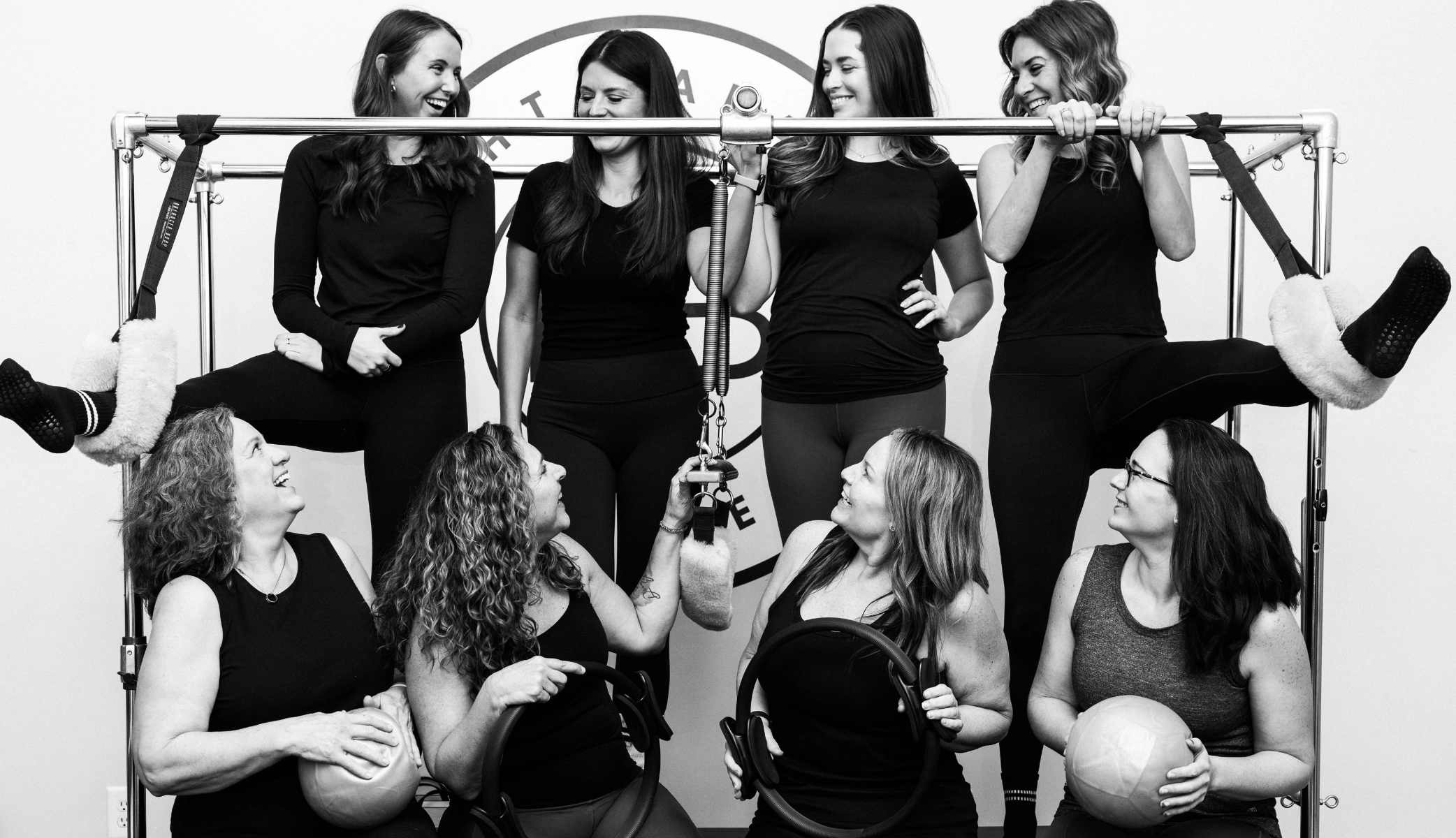
As Delaware’s only state-licensed Pilates education center, we are serious about the quality of instruction and the training behind it. But serious does not mean stiff. Our studios are warm, our instructors are encouraging, and our community is full of people who once stood exactly where you are now.
Whatever path you choose, the most important step is the first one. You do not need to be flexible, fit, or experienced. You just need to show up ready to move.
View our class schedule or contact us to find the right starting point for you.
Sources and Further Reading:
GET STARTED
Sign Up Today With Right Balance Pilates